No heat
A furnace starts in a specific order. The step where it stops shows whether the problem begins with the thermostat, venting, ignition, flame, or blower.
Heating repair
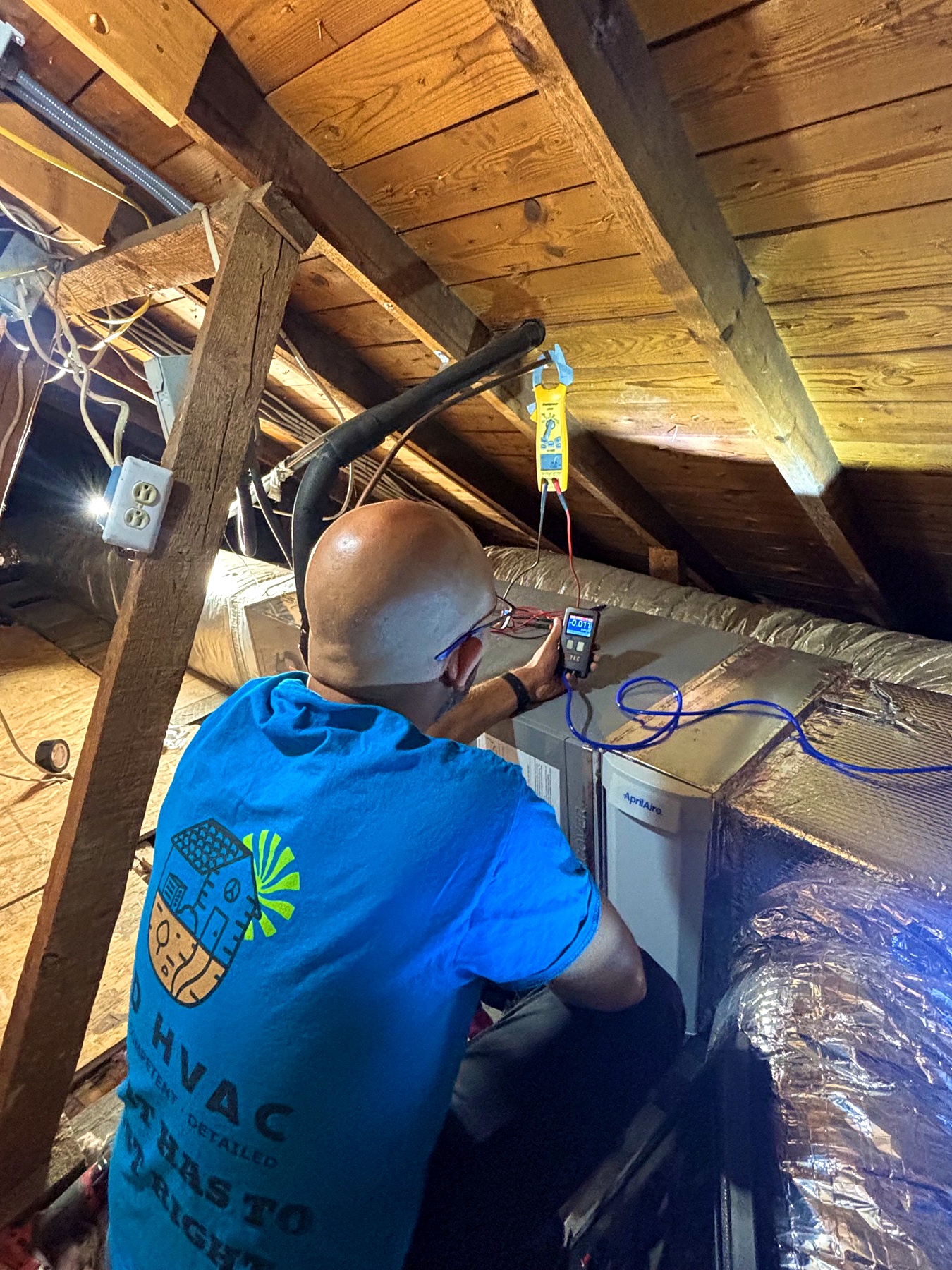
You do not need to know which part failed. Tell Jacob what the furnace is doing. He will find where normal operation stops, measure why it stopped, and explain what he found before you decide how to proceed.
Understand the failure before choosing the repair.
No heat and heating problems
A furnace can stop because a part wore out. It can also shut itself down to protect the home or equipment. Getting it running again is not the same as understanding why it stopped.
A furnace starts in a specific order. The step where it stops shows whether the problem begins with the thermostat, venting, ignition, flame, or blower.
A furnace that starts and quickly stops may be protecting itself. The important question is what made a safety control step in.
A furnace may refuse to light even when the igniter works. It will also stop ignition when a required safety condition is missing.
Weak airflow can come from the motor. It can also come from a restrictive filter, coil, return, or duct system that makes the blower work too hard.
Diagnostic approach
The tests depend on what the furnace is doing. The path stays simple: confirm the problem, find where normal operation changes, measure why, and explain the options.
You will receive a diagnosis and repair options before additional work begins.
Schedule a Furnace DiagnosisRepair context
A failed part may be the cause, or it may be reacting to another problem. A furnace that overheats will shut itself down. Replacing the safety control would not correct the airflow problem that caused the overheating.
Start with what you noticed, then confirm what the furnace actually does.
Use the startup order and measurements to separate the failed part from the reason it failed.
Connect what was observed and measured to the repair in plain language.
Understand the repair, further evaluation, or replacement options before authorizing work.
FAQ
Jacob confirms the symptom, finds where normal operation stops, and measures why. He explains what the results mean before additional work begins.
Diagnostic pricing is confirmed when you schedule, before the visit is booked. Any recommended repair is discussed separately so you can decide how to proceed.
Yes. OCD HVAC diagnoses and repairs gas furnaces and forced-air heating systems in Roanoke and nearby Roanoke Valley communities.
Check the thermostat, furnace switch, circuit breaker, and filter. Note any error code or unusual sound. That is enough; you do not need to identify the failed part. Do not bypass safety controls or keep resetting a furnace that will not run.
A limit shuts the furnace down when it gets too hot. Repeated trips mean the cause still needs to be found. Do not keep resetting the furnace.
The furnace may detect a flame, venting, drainage, airflow, or control problem. Watching where the startup process stops helps separate those causes.
Furnace repair
Tell Jacob what the furnace is doing and share any error codes or unusual sounds. You do not need to diagnose it yourself. You will understand what was found before choosing what happens next.